

457 Plans for Police and Firefighters: How They Work

If you wear a badge or ride an engine, you probably have a pension. That pension is a big deal. But many officers and firefighters also have access to a second savings tool that gets far less attention: the 457(b) deferred compensation plan. Used well, it can help bridge the gap between an early retirement date and the rest of your life. Here's how a 457 plan for police officers and firefighters works, and here’s how a governmental 457(b) can fit alongside your pension and other retirement savings.
Key Takeaways
- A 457(b) is a deferred compensation plan offered by state and local governments and some tax-exempt employers.
- A pension gives you a steady monthly check.
- Police and fire paychecks can swing a lot.
- Some public safety workers pay into Social Security. Others don't. It depends on the employer.
What Is a 457(b) Plan?
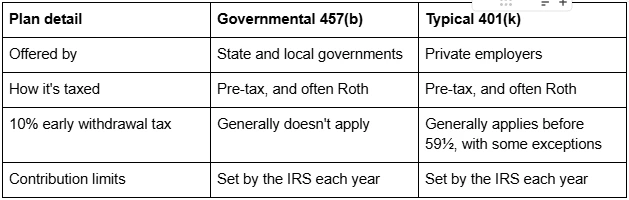
A 457(b) is a deferred compensation plan offered by state and local governments and some tax-exempt employers. The IRS says contributions and earnings in a 457(b) grow tax-deferred. Many government plans also allow Roth contributions. Those are made after tax.
Your city, county, or state agency sets up the plan and chooses the investment options. You decide how much of each paycheck to put in, up to IRS limits that change each year.
Why Does a 457(b) Matter if You Already Have a Pension?
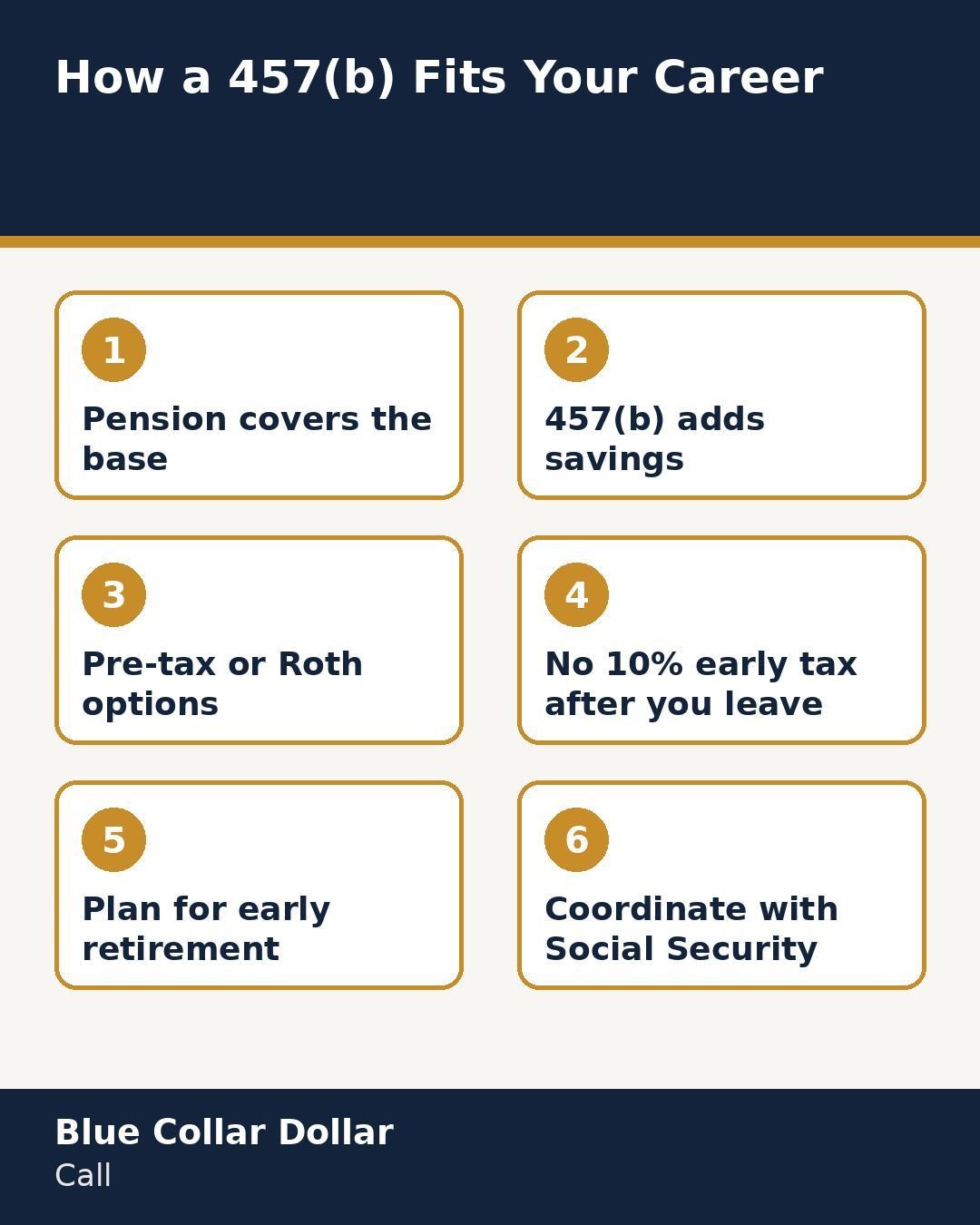
A pension gives you a steady monthly check. That's a strong base. But it may not cover everything, especially if you retire in your 50s and have decades ahead.
Extra savings can help with:
- The years before Social Security starts, if you are eligible
- Health insurance costs before Medicare
- Big expenses like a home repair, a new truck, or helping kids
- Inflation, which can shrink what a fixed pension buys over time
How Are Withdrawals Different?
This is the feature many first responders don't know about. Most retirement plans, like a 401(k) or an IRA, add a 10% additional tax on many withdrawals before age 59½. A governmental 457(b) works differently.
The IRS explains in Topic 558 that distributions from an eligible state or local government 457 plan generally aren't subject to the 10% additional tax on early distributions. The exception is money that was rolled into the 457 plan from another type of plan, like a 401(k) or IRA. Regular income tax still applies to pre-tax money.
For officers and firefighters who often retire earlier than other workers, that flexibility can be valuable. You'll still need to follow your plan's rules on when you can take money out, which usually means after you leave the job.
Qualified public safety employees may also qualify for exceptions to the 10% additional tax from certain governmental retirement plans after separation, subject to age or service requirements. IRA rules differ.

Pre-Tax or Roth: Which Is Better?
It depends on your situation. Pre-tax contributions lower your taxable income now. You pay tax when you take the money out. Avoiding the 10% additional tax does not automatically make a Roth withdrawal tax-free. Qualified Roth distributions generally require a five-year tax holding period and age 59½, disability, or death.
Some people split contributions between both to spread out their tax risk. Overtime-heavy years, a spouse's income, and your expected pension size can all affect the choice. This is a good question to bring to a financial professional and a tax professional.
How Much Should You Put In?
No one number works for everyone. Start with your expected pension. Then think about when you want to retire and what you want life to look like after the job. From there, work backward to a savings rate. Small amounts saved every paycheck can grow a lot over a long career.
Your governmental plan may allow age-based catch-ups. They start in the year you turn 50. The limits are higher at ages 60–63. There's also a special catch-up. It may apply in the three tax years before the plan’s normal retirement age. It's based on limits you didn't use before. You can't use both catch-up methods in the same year. Ask your plan administrator about the current limits and any Roth rules that apply to you.
What About Overtime and Special Pay?
Police and fire paychecks can swing a lot. Overtime, details, and special pay can push income up in some years. Those high-income years can be a smart time to think about pre-tax savings. Lower-income years may be better for Roth. A plan built around your real pay history can help.
Common Mistakes to Avoid
- Ignoring the plan. Many eligible workers never enroll.
- Leaving it on autopilot. Review your investments and contribution rate as your career changes.
- Rolling money in without thinking. Moving 401(k) or IRA money into a 457(b) can bring back the 10% early tax on that money.
- Cashing out at once. A large withdrawal in one year can mean a large tax bill.
How Does a 457(b) Fit With Social Security?
Some public safety workers pay into Social Security, and some do not, depending on the employer. Your pension, 457(b), and any Social Security benefits should be planned together, not one at a time. Timing matters for all three.
Get a Clear Plan
A 457 plan for police officers and firefighters can be one of the most flexible tools you have. We help people who serve connect their pension, 457(b), savings, and Social Security into one clear retirement income plan. Request an initial retirement-planning conversation. Talon, LLC currently waives its initial financial planning fee for eligible Blue Collar Dollar applicants. Adviser availability varies by state. Confirm the scope and fees of any proposed ongoing services before proceeding.
Disclaimer: Advisory services offered by Talon, LLC, an SEC-registered investment adviser. This article is for general education only and is not individualized investment, tax, or legal advice. Investing involves risk, including the potential loss of principal. Talon does not provide tax or legal advice; consult your own tax and legal professionals. Plan rules vary by employer, so check your plan documents.
Frequently Asked Questions
Q: What is a 457 plan for police officers?
A: It's a deferred pay plan. Many state and local governments offer one, including police and fire departments.
Q: Is there a 10% penalty for early 457(b) withdrawals?
A: Generally no for governmental 457(b) plans, except money rolled in from other plan types. Income tax still applies to pre-tax money.
Q: Can I contribute to both a pension and a 457(b)?
A: Yes, if your employer offers both.
Q: Should I choose pre-tax or Roth?
A: It depends on your tax situation now and later. Ask a financial and tax professional.
Q: When can I take money out?
A: Usually after you leave your job. Check your plan's rules.