

TSP and the Blended Retirement System Explained

If you joined the military on or after January 1, 2018, you're in the Blended Retirement System, or BRS. Many who served before then opted in. The BRS changed how military retirement works. It still includes a pension for those who serve long enough, but it also puts much more weight on the Thrift Savings Plan, or TSP. That means the choices you make about your TSP can shape your retirement, even if you don't stay for 20 years. Here's a clear look at how the TSP blended retirement system pieces fit together.
What Is the Blended Retirement System?
The BRS "blends" two kinds of retirement benefits. Active-duty members generally qualify for retirement after 20 years of active service. The other is a defined contribution account, the TSP, where the government adds money alongside your own savings.
Under the legacy system, members leaving before qualifying for retirement generally did not receive a military pension. They could still retain their own TSP contributions and earnings. Under the BRS, members who leave early can still take their TSP savings with them, including government contributions once they're vested.
How Does the 1% Automatic Contribution Work?
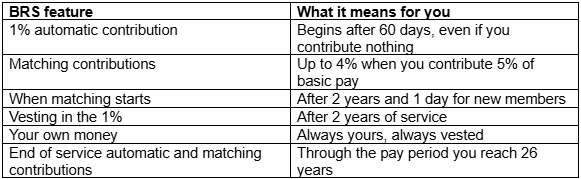
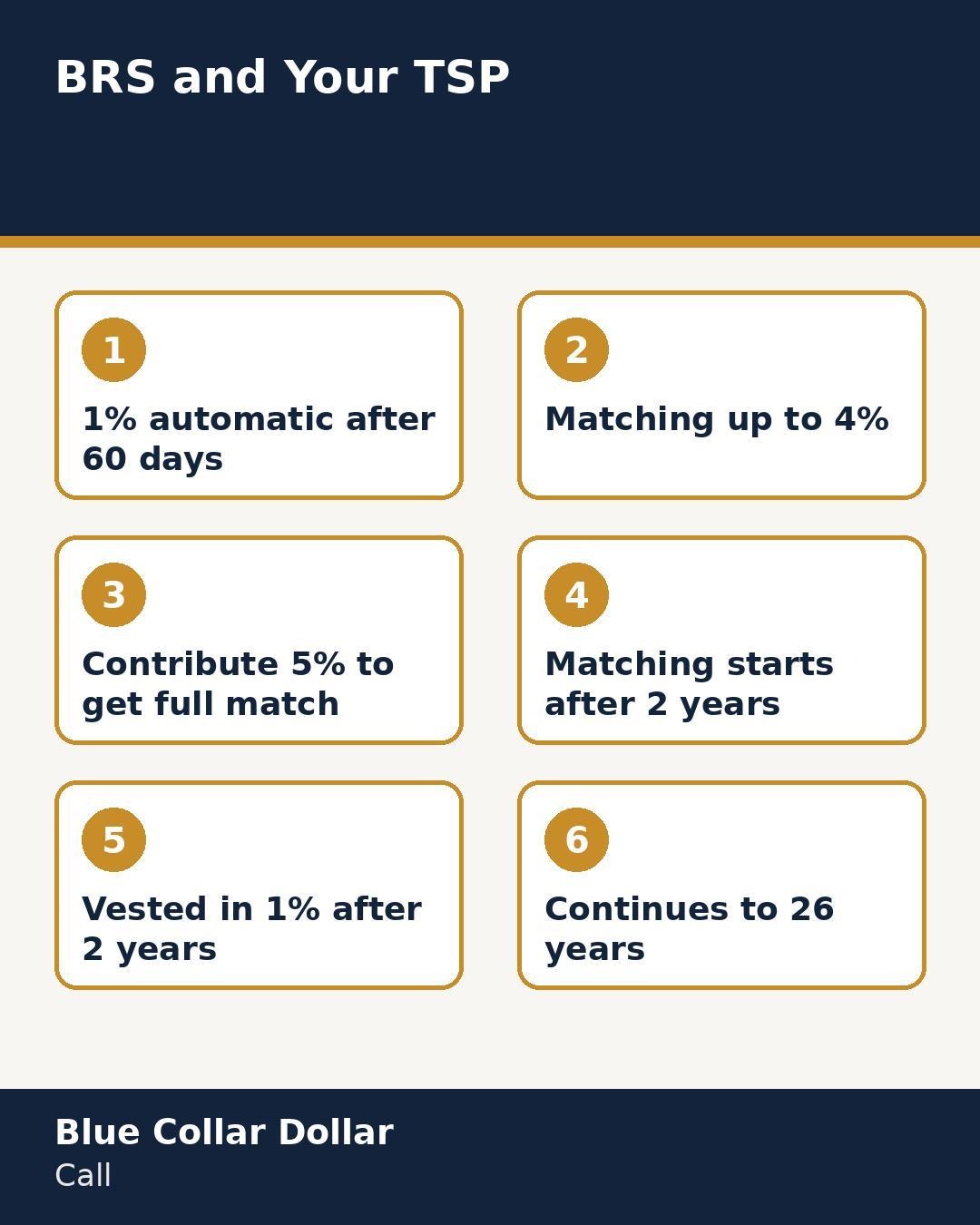
According to the TSP, BRS members receive a Service Automatic (1%) Contribution equal to 1% of basic pay each pay period. You don't have to contribute anything to get it. For BRS members, these contributions begin after you've served 60 days.
This 1% is subject to vesting. Army Reserve guidance on the BRS explains that members become vested in the 1% automatic contribution after completing two years of service.
How Does Matching Work?
Matching is where your own choices matter most. The TSP explains that the service matches the first 3% of basic pay you contribute dollar for dollar, and the next 2% at 50 cents on the dollar. If you contribute 5% of your basic pay, your service adds 4% in matching. With the 1% automatic contribution, that's a total of 5% from the government.
If you contribute less than 5%, you leave some of that match on the table. If you stop contributing, the matching stops too, though the 1% automatic contribution continues.

When Does Matching Start?
For new members, matching begins after two years and one day of service. Members who opted into the BRS received matching right away. Automatic and matching contributions continue through the pay period in which you reach 26 years of service.
What About Automatic Enrollment?
Members automatically enrolled on or after October 1, 2020 generally start at 5% of basic pay unless they elect otherwise. Check your current payroll contribution election. You can change that percentage. Since contributing 5% gets the full match, many members review their rate early in their career.
How Does the Pension Fit In?
Active-duty members generally qualify for retirement after 20 years of active service. Guard and Reserve members generally need 20 qualifying years, with retired pay usually beginning at age 60, or earlier when eligible. Under the BRS, the pension multiplier is lower than under the legacy system. Your pension and TSP should be considered together when planning retirement income.
What Happens If You Leave Before 20 Years?
You keep your own contributions and their earnings. You also keep vested government contributions. You can leave the money in the TSP, roll it over to another eligible plan, or take it out, with possible taxes and penalties depending on your age and the type of money. Each option has trade-offs.
Traditional or Roth TSP?
The TSP offers both. Traditional contributions are pre-tax. Roth contributions are after-tax, and qualified withdrawals can be tax-free. Many junior members are in lower tax brackets, which is one reason Roth often comes up. Combat zone pay can also have special tax treatment. A tax professional can help you decide.
Simple Steps for Your TSP
Log in to your TSP account. Check your contribution rate. Check your contribution rate and matching eligibility. Once eligible, contributing 5% of basic pay each pay period generally earns the full service match. Look at your funds. Name your beneficiaries. Check again after each promotion. Set a reminder to review once a year. These steps are quick. They can add up to a lot over a career. Small changes made early have more time to grow.
Common Mistakes to Avoid
- Contributing less than 5% and missing part of the match
- Never reviewing your fund choices
- Cashing out the TSP when you separate without understanding the tax hit
- Planning your TSP and pension separately
Plan Your Next Mission
The TSP blended retirement system gives you real tools, but they work best with a plan. We help service members and veterans connect their military pension, TSP, and other savings into one clear retirement income plan. Request an initial retirement-planning conversation, and an advisor will follow up. Talon, LLC currently waives its initial financial planning fee for eligible Blue Collar Dollar applicants. Advisor availability varies by state.
Disclaimer: Advisory services offered by Talon, LLC, an SEC-registered investment adviser. This article is for general education only and is not individualized investment, tax, or legal advice. Investing involves risk, including the potential loss of principal. Talon does not provide tax or legal advice; consult your own tax and legal professionals. Plan rules vary, so check your official plan documents.
Frequently Asked Questions
Q: How much does the military contribute to my TSP under the BRS?
A: Once eligible, you can receive a 1% automatic service contribution plus up to 4% in matching contributions. Contributing 5% of basic pay each pay period generally earns the full match.
Q: How much do I need to contribute to get the full match?
A: Once eligible for matching, contribute 5% of your basic pay.
Q: When am I vested in the 1% automatic contribution?
A: After two years of service.
Q: Do I still get a pension under the BRS?
A: Active-duty members generally qualify for retirement after 20 years of active service. Guard and Reserve members generally need 20 qualifying years, with retired pay usually beginning at age 60, or earlier when eligible.
Q: What happens to my TSP if I leave early?
A: Your contributions and vested government contributions stay yours.